


The NSO Pops Conductor’s —Memories of The Kennedy Center
For my generation the day the music died was in February 1958, with the tragic death of Buddy Holly, Ritchie Valens and the Big Bopper. But the day one of America’s greatest composers, Marvin Hamlisch, died following a kidney transplant was 14 years ago this week. I remember Hamlisch not only as a close friend for decades, but as a loyal aficionado of the Kennedy Center and the first Principal Pops Conductor for the National Symphony Orchestra.
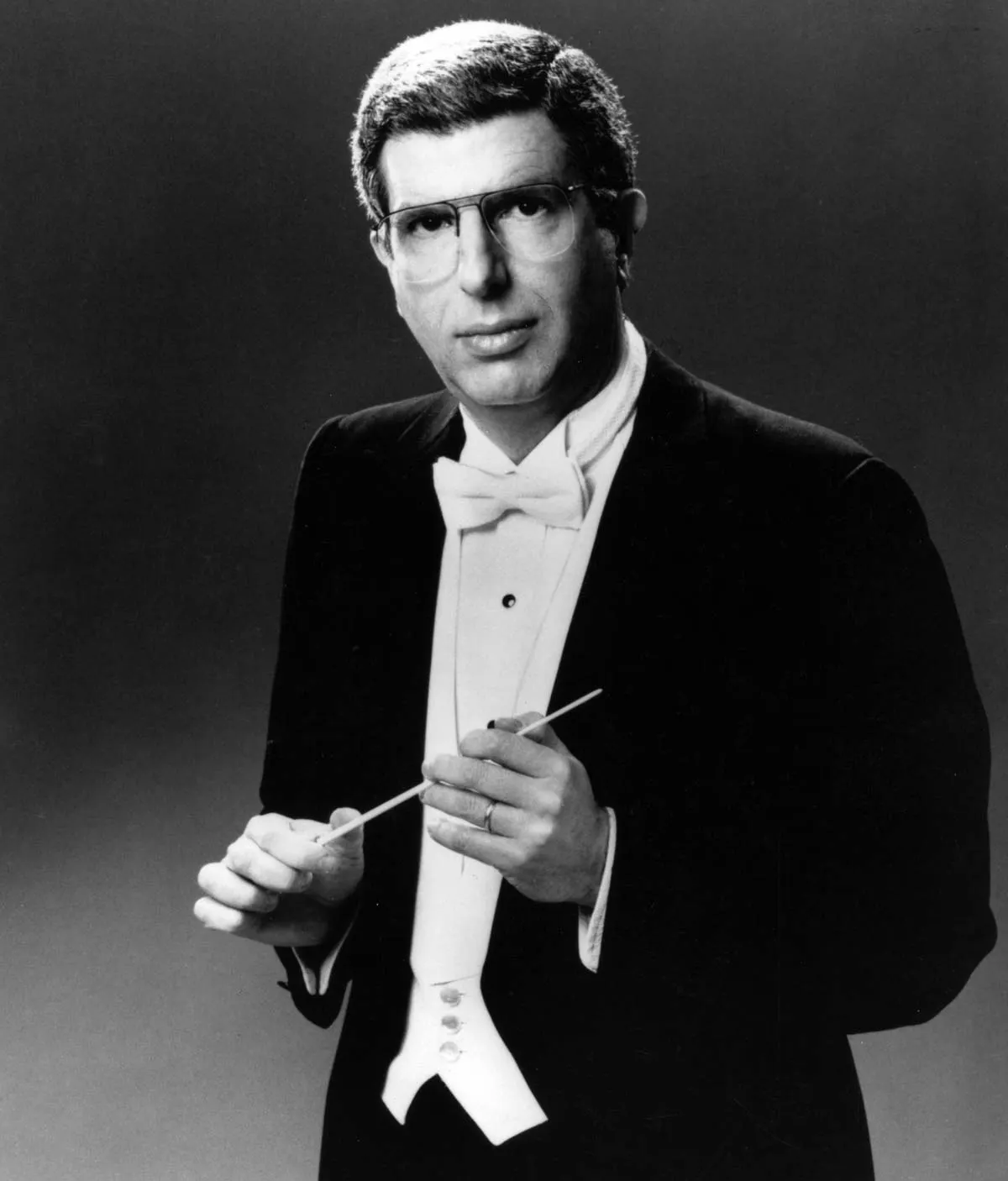
I first met Marvin through a mutual friend in the 70’s at Westbury Music Fair in New York, where he was performing. We were introduced in his dressing room before the show. Marvin seemed to take an immediate liking to me. I found him smart, funny, and real, but he just wasn’t sexy. In fact, he was outright “nerdy.” After all, we were both in our twenties – he, a few years my senior – and sex appeal was important in those days.
He invited me to join him at his mother’s house for an informal dinner after the show. It was the classic story of the haymisheh Jewish guy taking home “a nice Jewish girl” to meet his mother, in this case a widowed Austrian immigrant. We sat around her dining table as she served up her special goulash, one of Marvin’s favorites, and bragged about “my son, the entertainer.” She must have thought a shidduch was in the works. Marvin laughed as she related embarrassing childhood stories about her son.
Over the years our friendship developed. He was intellectually curious and politically concerned.
Millions of viewers woke daily to his Good Morning America theme, or knew his music from Broadway’s long-running A Chorus Line. Award-winning composer, conductor and entertainer, Marvin kicked back between shows at the Kennedy Center one evening to talk with me about becoming the Center’s first Principal Pops Conductor for the National Symphony Orchestra.
“It’s my dream come true. I’m the son of two immigrants. I remember where I was when John F. Kennedy became president, and where I was when he died. I pinch myself when I go on stage at the Kennedy Center. I’m trying to make sure American music is played here in the Concert Hall.”
He shared his insights with me on the creative process. If he could only do one thing, what would it be?
“Creating, because I’ll leave something behind – the melodies”
What kind of environment inspires his creative process?
“I’ve become very adept at writing almost anywhere, as long as there’s nobody in the room except my lyricist. You put a third person in the room, and I can’t write. Usually we get a piano in the hotel suite.”
If he’s not creating, what does he do to unwind between shows?
“First thing, get rid of the tux. Catch up on mail, go to a movie, or, in Washington, work out on the treadmill in the gym at my hotel.”
Did he have a favorite monument?
“Lincoln. There he is in all that stone; you look at the stone before the words and you start to feel the man. I feel that when you need a Washington, a Washington shows up; when you need a Lincoln, a Lincoln shows up. Right now, we could certainly use a Lincoln.”
Although his main residence was in New York, Marvin and his wife, Terre Blair, bought a house around the corner from me in Georgetown. But he still preferred to stay a few blocks away at the Four Seasons Hotel, where he had a tuned grand piano moved into his suite so he could write. Presidents from both parties frequently invited him to perform his hits at the White House, and he usually worked in some spontaneous special material of his own.
Our paths crossed again years later on a cruise ship in the South Pacific. We were both part of the onboard enrichment program: Marvin as a performer, me as a lecturer on “political dish.” He spent his days composing, and we met in the private dining room for dinner. His nerdiness had become more appealing as he matured and his accomplishments stacked up.
Hamlisch was open to new ideas and beliefs, always curious, always questioning. He believed in the healing arts, and consulted a psychic, Dezia, at thesuggestion of his wife. One of Dezia’s best-known clients was Yoko Ono, who she is said to have warned about John Lennon’s death. Hamlisch also visited the Dalai Lama. Whatever he believed, it seemed to work for him.
But no matter how brilliant he was musically and otherwise, even the best spiritual healers and teachers could not save him from what a kidney transplant would ultimately cost him. Four months before his death, he quietly accepted a kidney from a close friend. At his age, he would not have had such good fortune waiting on an organ donor list – too young to die, but too old to move up the list for an anonymous donor kidney. Marvin refused to use his extensive connections to leapfrog the wait list, and being intensely private, he never went public with the surgery. Had he done so, speculation over how he’d gotten a kidney ahead of younger people on the list would likely have taken on a life of its own via the show-business grapevine. He wasn’t to one to complain or seek sympathy.
He barely stopped working long enough to recover, keeping a hectic pace of conducting, performing, and composing. Four months later, the transplant failed. He fell into a coma and passed away.
At 68, and had accomplished more in those years than most do in a lifetime. His work wasn’t finished – the Liberace film was still underway. The legacy he left is vast. Despite his many awards – Oscars, Grammys, Emmys, Golden Globes, a Tony, and even a Pulitzer.
Hamlisch told me one of his most cherished possessions was the toy duck that used to drop down on the game show, “You Bet Your Life,” a gift from Groucho Marx, for whom Marvin had once been a pianist. “Groucho was like a grandfather to me.” And producer Joe Papp gave him a gift he treasured just as much: his own words of advice offered after “A Chorus Line” opened on Broadway. It was advice, Hamlisch told me, that changed his life. “Be true to yourself when “conducting, performing, and composing.”